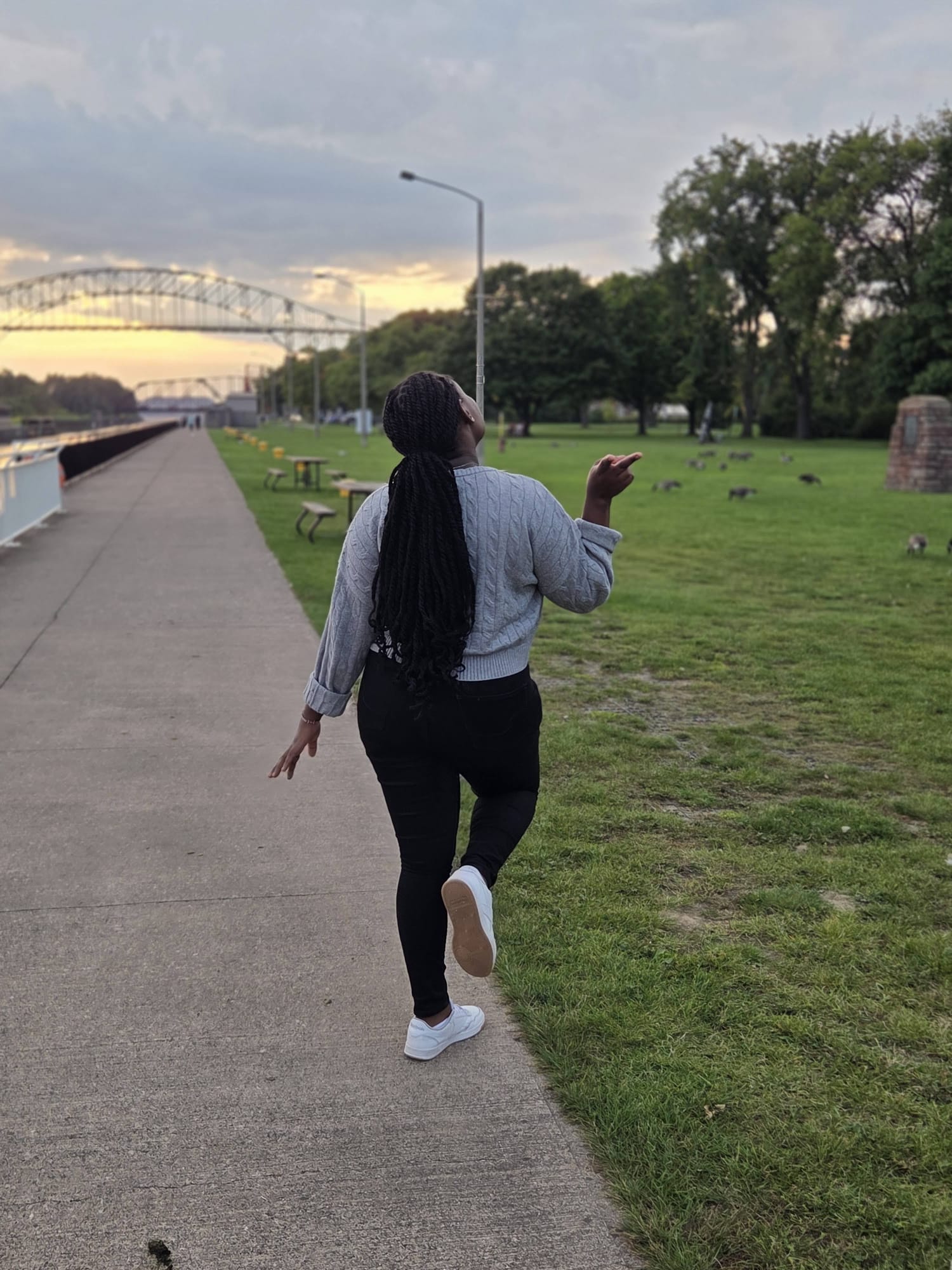
What it’s like to start over in a new country
After four years in Northern Cyprus completing her Bachelor’s degree, Abby K. packed up again, this time for Canada, to continue her studies. Originally from Gatanga in Murang’a County, Kenya, she’d hoped Northern Cyprus would offer a better life than it did. Her biggest fear moving for the second time was losing contact with two of her siblings with whom she had lived in Northern Cyprus. In Canada, she was alone, no siblings, no extended family or friends. She completed a two-year program in one year.
We travel, initially, to lose ourselves; and we travel, next, to find ourselves.
—Pico Iyer, travel essayistToday, Abby works part-time and is slowly building a small world for herself an ocean away from home. In this personal reflection, she talks about adapting to new systems, journaling through the loneliest hours, and what it takes to rebuild in a new country while finding yourself.
On finding myself in a new city
The quiet mornings: When I wake up in Canada, the first thing I see is light, and mornings are usually much quieter than in Kenya. Even when it rains, it’s hard to hear it from inside the house; I sometimes have to step outside to realize it’s raining, which always makes me smile. Most mornings I feel relaxed, content, and grateful for where I am.
Morning rituals that I miss: In Kenya, I always slept with my windows open, so the first thing I’d see was trees, and the first thing I’d hear was my mum talking with my cousin in the kitchen, sometimes my dad too, cows mooing, goats bleating, chickens cooing, car horns just the common village noise in Kenya. Mornings were much busier and louder there, as you can see. I didn’t have many responsibilities; I was still young then. I’d help my mum with breakfast, and we’d plan the day together. Seeing my family every morning is something I deeply miss.
Getting around in Canada: I go to work by bus or by Uber, and sometimes my boyfriend picks me up or drops me off. In Kenya, I used matatus, or my parents would drop me off.
On completing studies early: I just completed a two-year program in one year, without taking any breaks. It makes me proud now, but it also meant I didn’t have much time to work or explore at first. However, it turned out to be the best decision, because now I can enjoy the place without so much pressure. The education system here is very hands-on, with labs, excursions, company visits, and internships.

A system that works
Labour laws that actually protect you: I work part-time with a flexible schedule, sometimes mornings, sometimes nights. Labour laws are taken very seriously here. There are mandatory paid holidays, a legal minimum wage in every province, and so far, my employers have been respectful. I never worked in Kenya, so I can’t really compare the two experiences, but I enjoy this one.
Cooking Kenyan food on weekends: I cook mostly on weekends. Luckily, many of the ingredients I need are available here, which makes me happy. My breakfast is usually cereal with milk. I keep lunches light because I am working, so I go for wraps or sandwiches, and in the evenings I eat whatever I prepared over the weekend; that means ugali, mukimo, chapati, or pilau. I try to avoid fast food.
A quieter social life: Social life here is nowhere near as active as it was in Kenya or Northern Cyprus. Most people go to school, work, then go straight home. That was hard to adjust to at first. I spend more time alone now, because everyone’s work and school schedules pull in different directions and we don’t meet often.
A system that just works: One thing that stood out to me is how well people follow basic rules. The system actually functions. The first time I took a bus, I noticed how quiet and respectful everyone was: no noise, no music, just a button you press to signal your stop. In Kenya, buses are like mini-discos with loud music and interesting decorations, and whenever you need to stop, you have to speak or shout to the bus conductor, depending on how loud it is. Matatus can stop almost anywhere. Here, you only get off at designated stops.

Coping with loneliness
The hardest part of living abroad: Loneliness usually hits when I check the time and realize it’s nighttime in Kenya, and I can’t call home because of the time difference. That’s been my biggest challenge so far. At least in Northern Cyprus, the time difference was one hour, and only during winter.
Coping mechanisms: These days, I journal a lot. I also text my loved ones to let them know what’s happening and when I’ll be free to call.
On evenings, then and now: When I get home from work, I take long showers, watch movies, and sometimes do puzzles. Back in Kenya, evenings meant sitting together as a family, talking and telling stories until bedtime.
Staying connected: We have a Kenyan community here, and we meet up during holidays when people have more free time. Other than that, I feel connected to my Kenyan roots when I cook our local delicacies, listen to Kenyan music, and speak Kikuyu and Swahili with my boyfriend, who is Kenyan too. These small things keep me feeling connected to home.
Life lessons
What nobody warns you about: As a Kenyan, you can easily feel rushed in Canada because of the system that is based on time and structure. This predictability makes life in Canada reliable but can add panic or anxiety if you come from a less structured society. It is definitely very different from life back home.
Who I’m becoming: I’m more independent now. I spend more time with myself, and I’ve learned what I like and what I don’t. Honestly, I don’t think I would be the person I am today if I’d stayed in Kenya, surrounded by the comfort of friends and family.
Advice for anyone starting over abroad: Don’t worry. When things get tough, it usually means something better is coming. My immigration journey was difficult, but once Canada accepts you, you grow into a better version of yourself. So, yes, go ahead and give it a chance!