
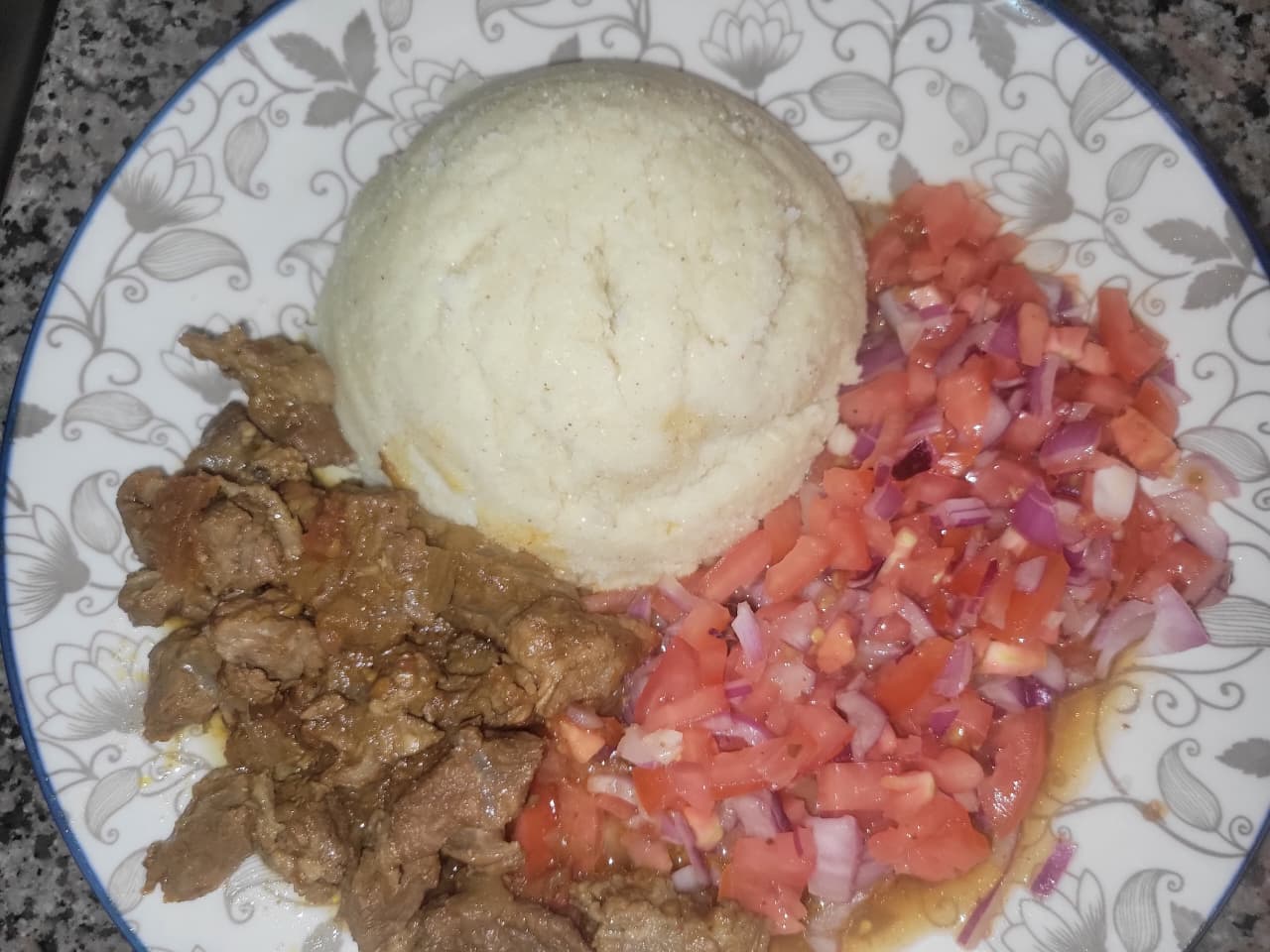
Ugali always wins
I hadn’t made ugali in almost a year after moving abroad.
I didn’t realize how deeply I missed it until I found myself standing in a Kenyan friend’s kitchen, watching a pot of water slowly come to a boil. That moment took me straight back to my mother’s kitchen, where I prepared dinner with my siblings, surrounded by warmth and laughter.
Now, here we were, miles away from home, gathered as Kenyans, recreating a meal that carried our history, our culture, and our sense of belonging.
At a previous gathering, we’d used up all the maize flour friends had brought from Kenya. That evening, my friends and I were introduced to a different version of ugali made with semolina flour rather than the maize flour we grew up with.
For most of us, it was our first time encountering semolina flour, let alone imagining it could be repurposed into ugali. But living abroad teaches you to adapt.
Just like at home, we started with water, adding a bit of butter and a splash of milk for flavor. Once the water came to a boil, my friend poured in the semolina and began the hard work of stirring quickly and carefully to prevent lumps. Watching him mix the ugali felt deeply familiar, comforting in the best way. It was a technique passed down through generations, in our mother’s, grandmother’s, or a relative’s kitchen.
That night, as we laughed and teased our way through the cooking, it wasn’t just about the food. We were remembering our roots.
The stove is the shrine where I convene with my ancestors.
— Adam Ragusea, food writer/YoutuberKenya is home to more than 50 ethnic groups, but certain foods, like ugali, or it’s equivalent, is shared across many of them.
As we moved around the kitchen, we barely noticed our differences. Thanks to Kiswahili, our national language, we slipped easily into shared jokes and familiar expressions, conversing in our native language as we waited for the meal to come together.
Making Ugali Abroad
A friend from Zimbabwe had recently discovered a market that sold kale — a rare find where we lived. So alongside the ugali, we prepared our beloved sukuma wiki, cooked with beef, just as it’s done in many Kenyan households. And of course, as true Kenyans, our host brought out what might be the most treasured spice abroad: Royco mix.
We stirred the greens, chatting and laughing as the food simmered. Stories flowed easily. We spoke about home, life abroad, our small victories and struggles of building new lives far from where we started.
When we finally sat down to eat, the ugali tasted better than I remembered. Or maybe it wasn’t just the food. It probably was the shared experience, the familiarity, and the comfort of being understood without having to explain yourself.
After going without ugali for so long, that meal felt like a homecoming.
Carrying Home With Me
Since then, I’ve relocated to yet another country. And I found semolina again. It has become my stand-in — my way of recreating ugali wherever I land.
I’ve since introduced my son to ugali, passing on a small but meaningful part of my culture. My husband, on the other hand, is still warming up to it. To him, ugali doesn’t have much of a taste, and maybe he’s not wrong. But he’s grown fond of mukimo, another Kenyan dish he tried for the first time when he visited Kenya — and that feels like a small win.
Living abroad teaches you that home isn’t always something you return to. Sometimes it’s something you cook far away from what used to be home. Something you stir patiently in a pot. Something you share at a table with people, in a bid to pass on a little of your home culture to them.
Ugali, for me, is more than food. It’s comfort. It’s memory. It’s proof that even far from home, you can still feed the parts of yourself that remember where you come from. That gives me so much joy and peace, and when I see my son enjoying every bite, I’m proud to be a Kenyan mum.
We would love to know: what food do you turn to when you’re missing home?
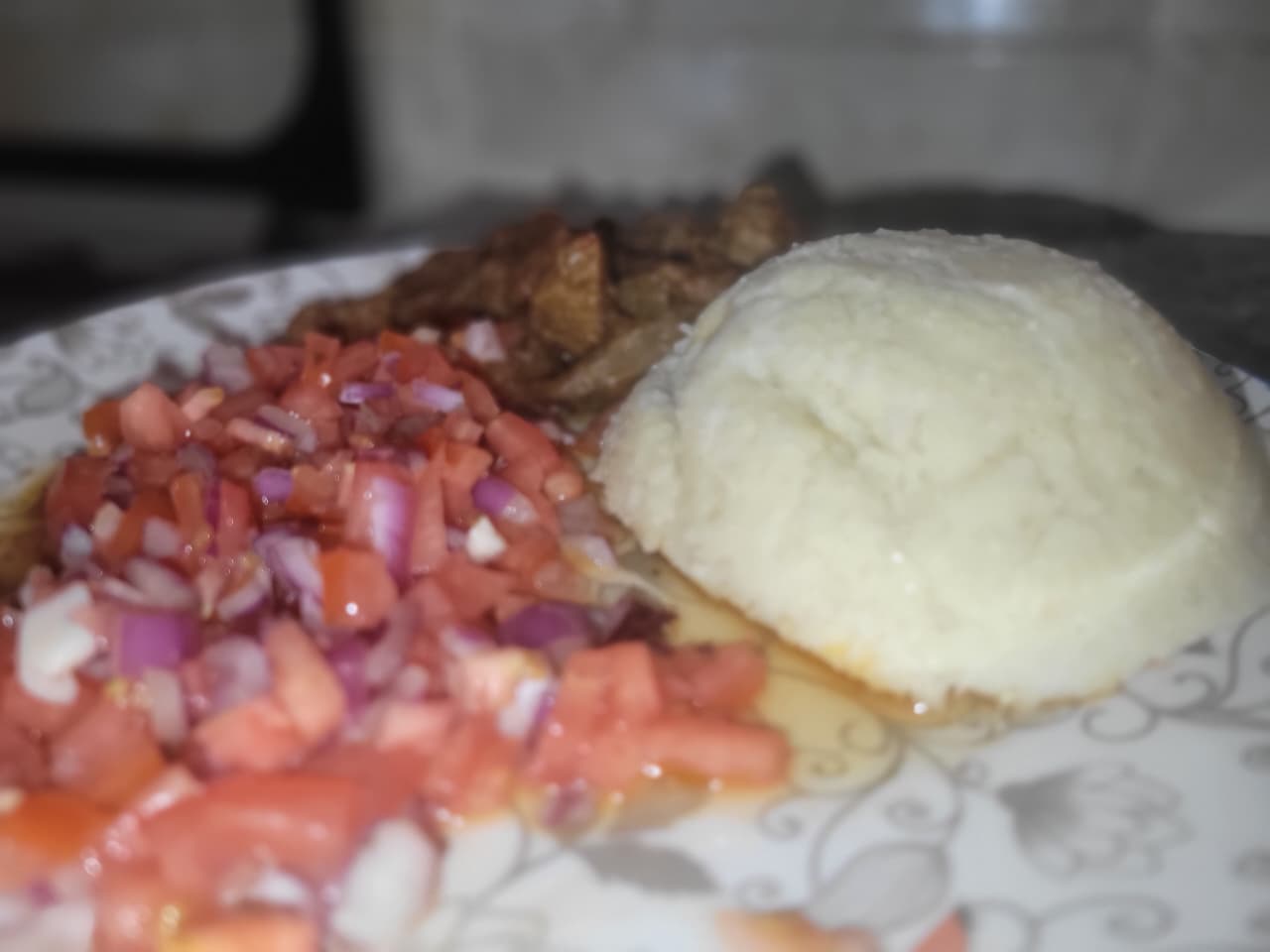
Semolina Ugali (Kenyan-ugali for those living abroad)
Ingredients
Equipment
Method
- Bring water to a boil: In a heavy-bottomed pot, combine the water, butter, milk, and salt. Bring to a boil over medium-high heat.
- Add the semolina: Once boiling, gradually pour in the semolina flour while stirring constantly with a wooden spoon to prevent lumps from forming.
- Stir until it comes together: Keep stirring quickly and firmly as the mixture thickens. This is the hard work. Press and fold the dough against the pot sides until it's smooth, stiff, and pulls away cleanly. Cover and let it cook for 5 minutes, then fold it in and cook for another 5 minutes.
- Shape and flip: Using a wet wooden spoon, shape the ugali into a smooth dome or mound while it's still in the pot. Turn it out onto a flat plate while still warm, then flip it upside down so the dome faces upward. Let it rest for a minute or two before slicing.
- Serve: Serve the ugali warm alongside beef stew with sukuma wiki (collard greens), or a stew of your choice. If you're like me, you can also enjoy warm ugali with a cup of fresh cow milk — boiled and slightly cooled — or maziwa mala (cultured/soured milk).
